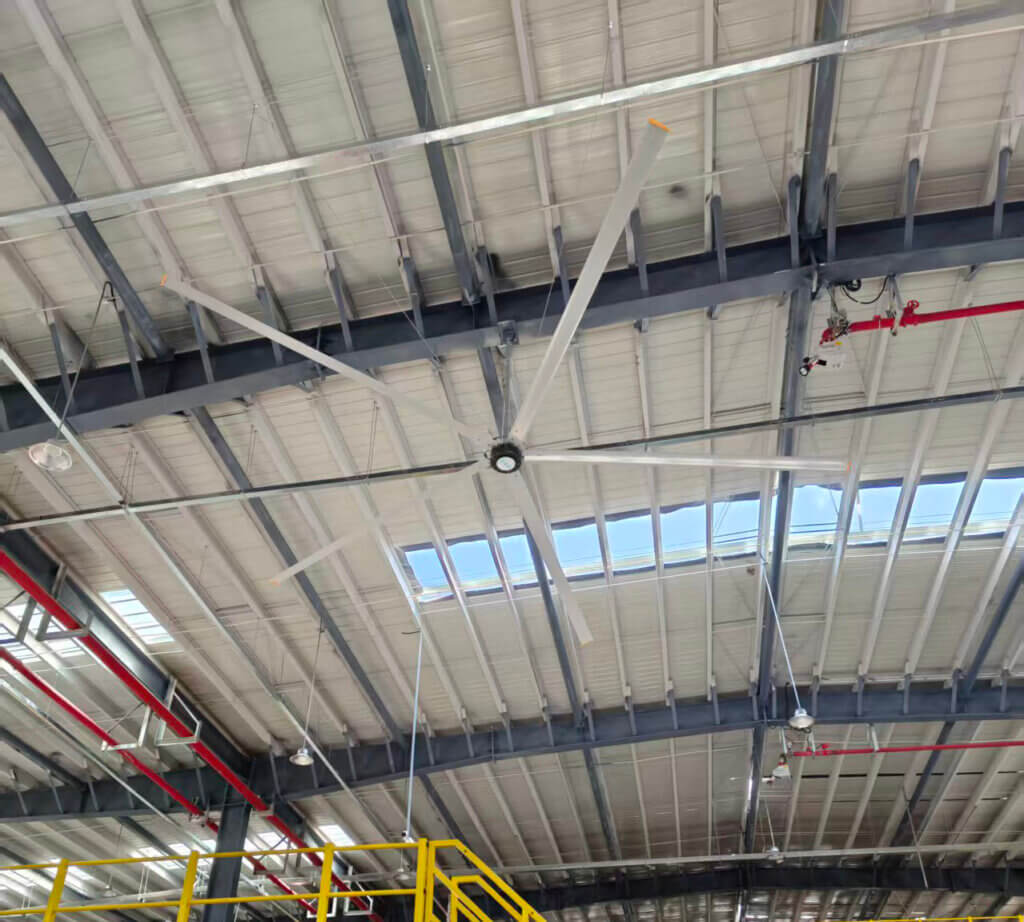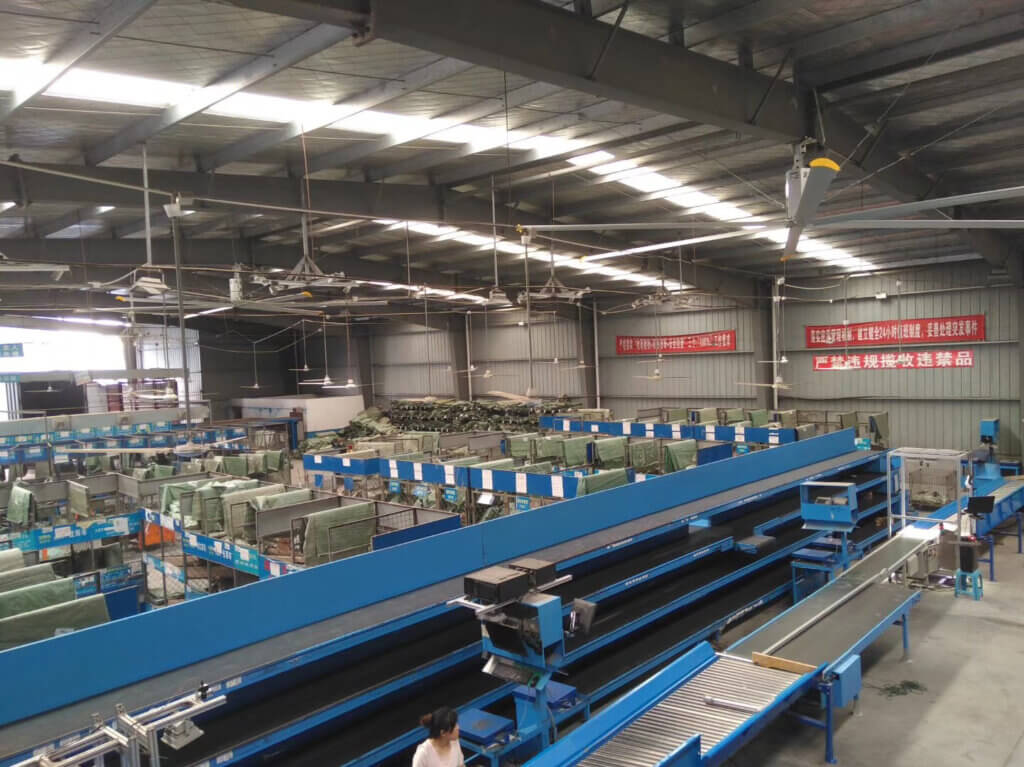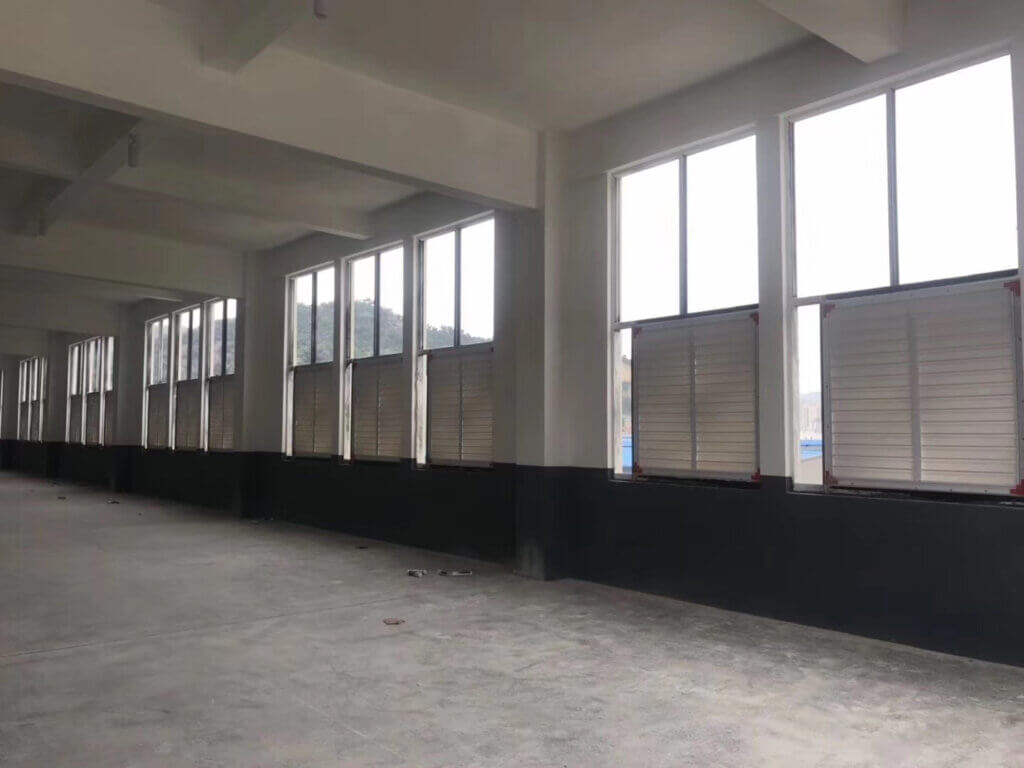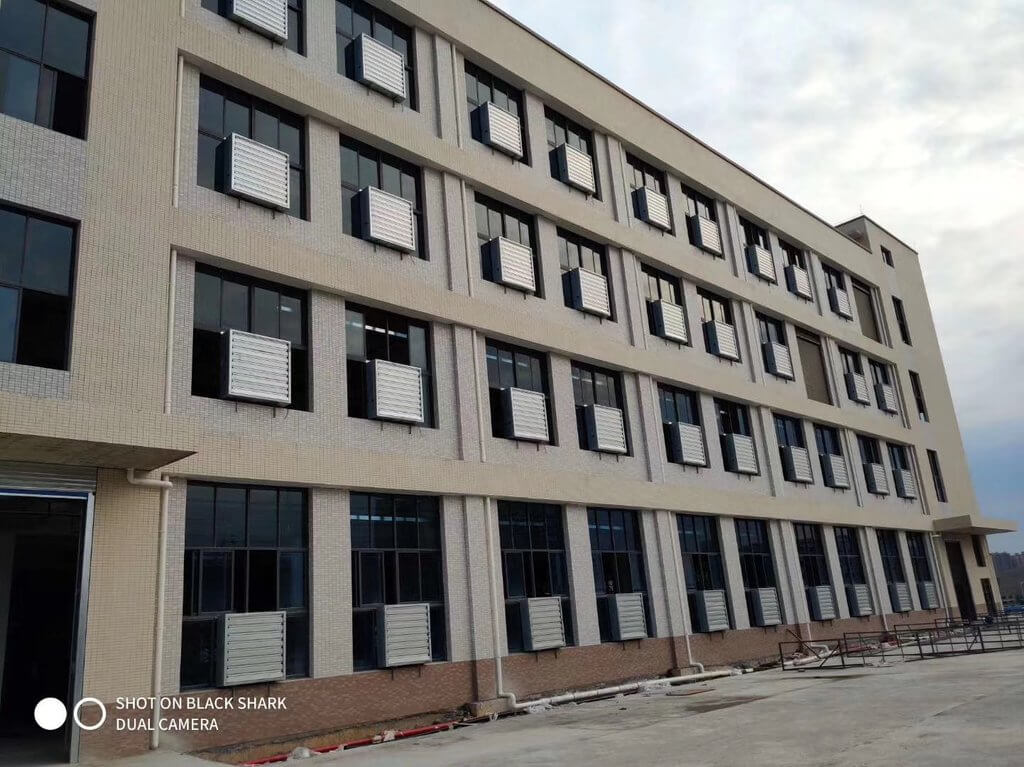
A wall fan near a forklift aisle may be suitable, but only when its location is checked against the vehicle route, the loads being handled, pedestrian access, and the fan’s mounting and service needs. There is no universal mounting height or offset that fits every truck, load, wall, and aisle. Plan around the site’s actual equipment and approved safety requirements.
Why an aisle-side fan needs a specific review
Forklift routes often pass close to walls, storage racks, doorways, and workstations. The truck itself is only part of the space to consider: its mast, forks, carried load, turning path, and work during loading or unloading can change the overhead and side clearance needed at different points.
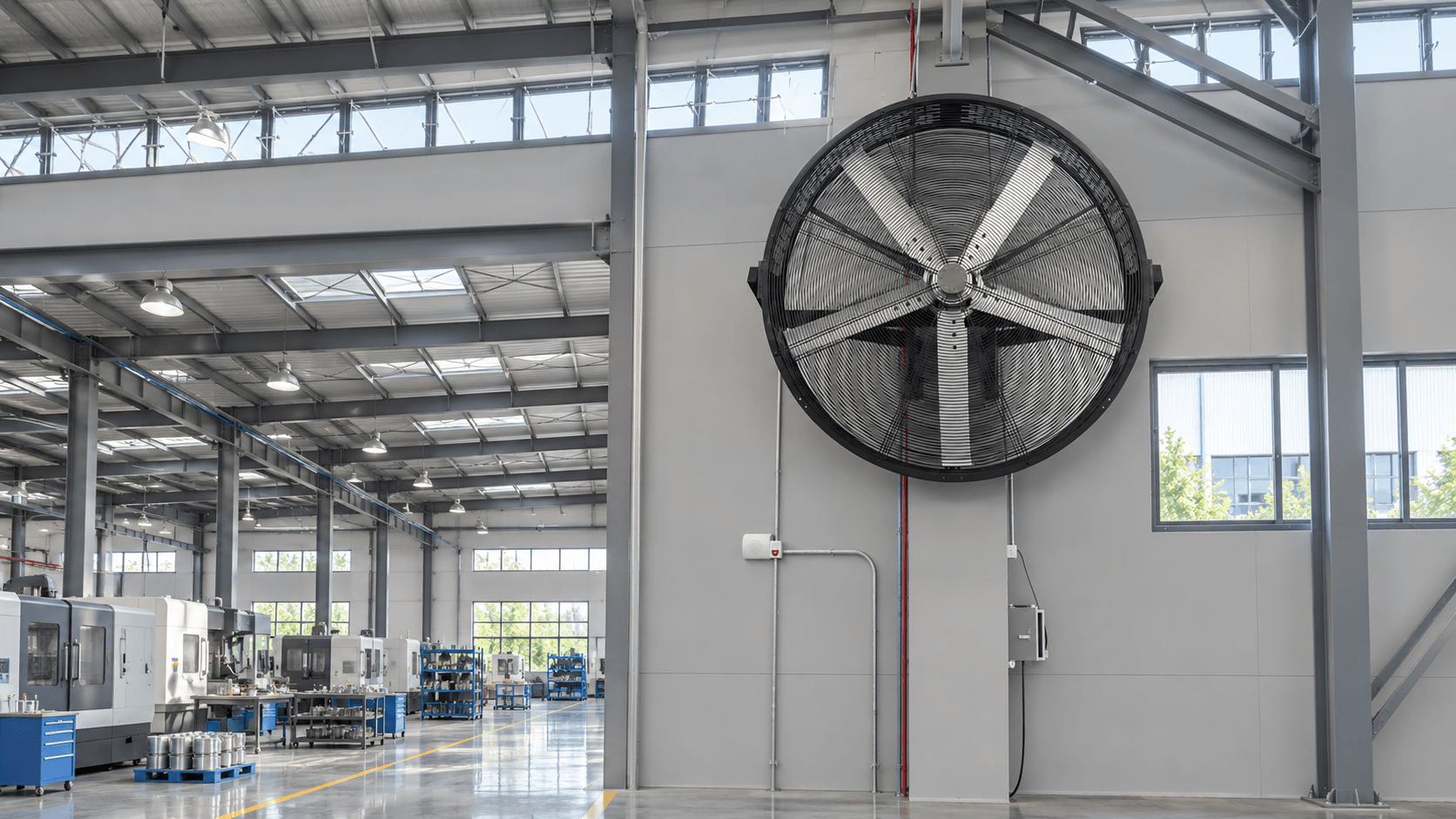
A wall-mounted fan also projects from the wall. Its guard, motor, adjustable connecting rod, and other parts should remain outside the relevant vehicle and load envelope. Hengshuangda’s industrial wall fan product page describes direction adjustment, a protective grille, and installation planning for qualified structures. Confirm the configuration of the exact model before planning the site.
Map the route, truck, and loads
Start with the site’s aisle plan and the forklift information used by the facility team. Walk the route and mark normal travel, turning and docking points, rack locations, doors, pedestrian walkways, and places where loads are raised or lowered. Review the conditions that occur during normal work, not just an empty truck traveling straight ahead.
- Identify the truck types and their mast and overhead profiles in the relevant operating positions.
- Include the sizes and shapes of loads routinely carried, raised, or placed near the wall.
- Mark turning areas, door openings, rack ends, crossings, and temporary staging points.
- Note pedestrian paths, operator sightlines, emergency access, and any equipment that already projects into the aisle.
If vehicles, attachments, racks, or handled loads change, revisit the layout. Do not rely on a single measurement taken at an empty aisle or use one vehicle’s dimensions for the whole fleet.
Keep the fan outside the operating envelope
Compare the proposed fan location with the truck and load route along the full aisle. Check wall projections, the fan guard, the mounting arm, cables or controls, and the space needed for inspection. Pay particular attention to points where loads are lifted near racks or doorways. The site’s responsible safety and facilities personnel should confirm the required clearances and any applicable local rules.
Do not narrow a marked aisle or pedestrian route to make room for a fan. If a location could be struck by a mast, fork, or load, select another position or request a project-specific design review. Do not create improvised guards, brackets, or mounting methods without approval for the chosen fan and structure.
Choose an airflow direction that suits the work area
Define what the fan should do before setting its direction: for example, provide air movement at a nearby occupied station while keeping the truck lane and its access clear. The wall fan product page describes an adjustable direction and speed. Use the model’s controls according to its instructions, then check the airflow in the real layout.
Keep loose packaging, labels, lightweight process materials, and stored items from being blown into the vehicle path. Avoid placing the fan so that its air stream conflicts with a site ventilation plan or a process that requires a separately designed exhaust or source-capture system. A circulation fan is not a substitute for ventilation controls.
Review mounting and future maintenance
The wall and fixing points need to be suitable for the selected fan and the building. Have qualified personnel review the actual structure and proposed mounting arrangement. The product page describes an adjustable connecting rod and installation planning for different structures, but those features do not establish that every wall or fixing point is suitable.
Plan inspection, cleaning, repair, and replacement access while the aisle is managed safely. Maintenance access equipment must not unexpectedly block vehicle or pedestrian movement. Coordinate service timing with the site team and follow the fan manufacturer’s instructions and facility procedures.
Check the layout before normal operation
Before the fan enters routine use, confirm that the selected unit is secure, the protective grille is in place, and the direction adjustment does not cause an operational problem in the occupied area. Have the facilities and safety teams review its position against the route, loads, and pedestrian paths. Any operating check involving vehicles should follow the site’s normal controls and be carried out by authorized personnel; do not move a vehicle or load toward a possible obstruction to test clearance.
For other products and model information, see the Hengshuangda product directory. Check the exact product data and installation instructions for the model selected.
Frequently asked questions
Can a wall-mounted fan go directly beside a forklift aisle?
It can be considered only if the fan and its mounting remain outside the site’s vehicle, load, and pedestrian operating envelopes and meet the applicable requirements. The decision depends on the actual aisle and equipment.
How high should the fan be mounted above the aisle?
There is no single height that applies to all forklift types and loads. Review the truck’s operating profile, the loads it handles, the selected fan, the building, and the site’s applicable requirements with qualified personnel.
Can the fan blow across the forklift route?
Set the direction according to the airflow goal and the facility’s operating conditions. Check whether it moves loose materials into the lane or conflicts with the site’s ventilation plan before routine use.
Does the protective grille replace aisle clearance planning?
No. A grille is a fan safety component; it does not prevent a vehicle, mast, or load from striking the fan or its mounting. The complete installation still needs a site-specific review.