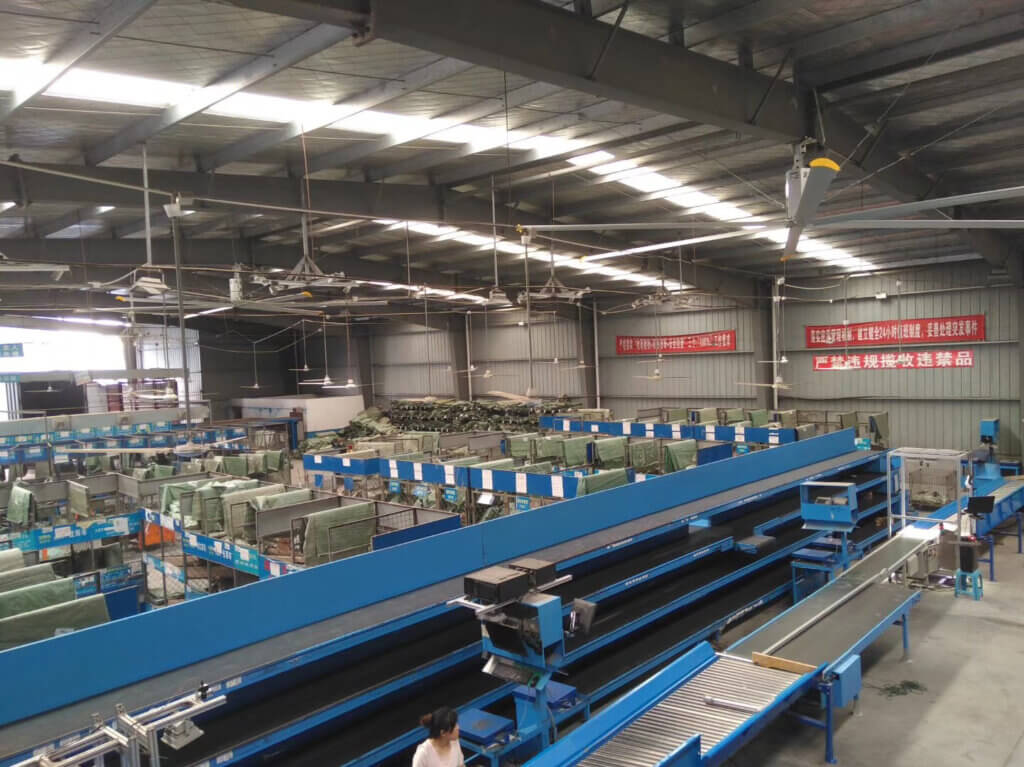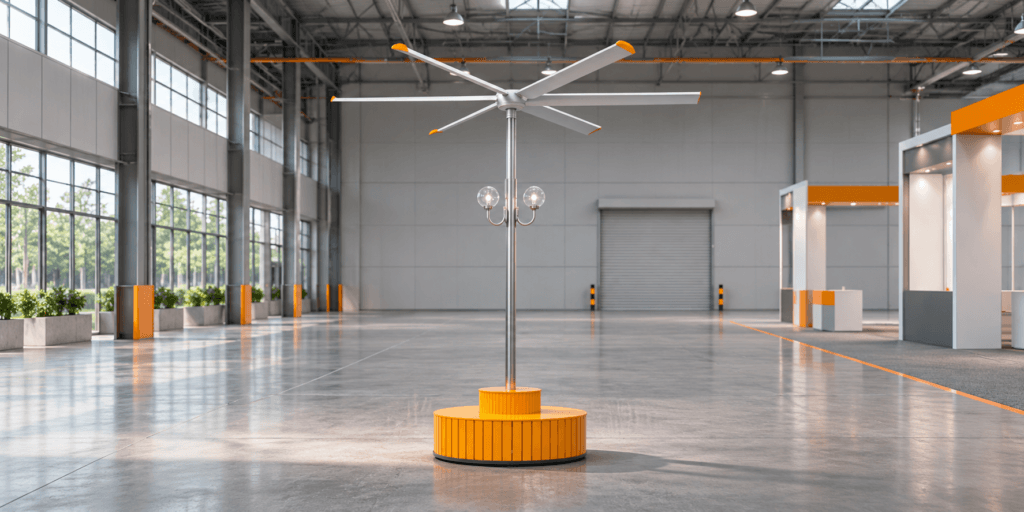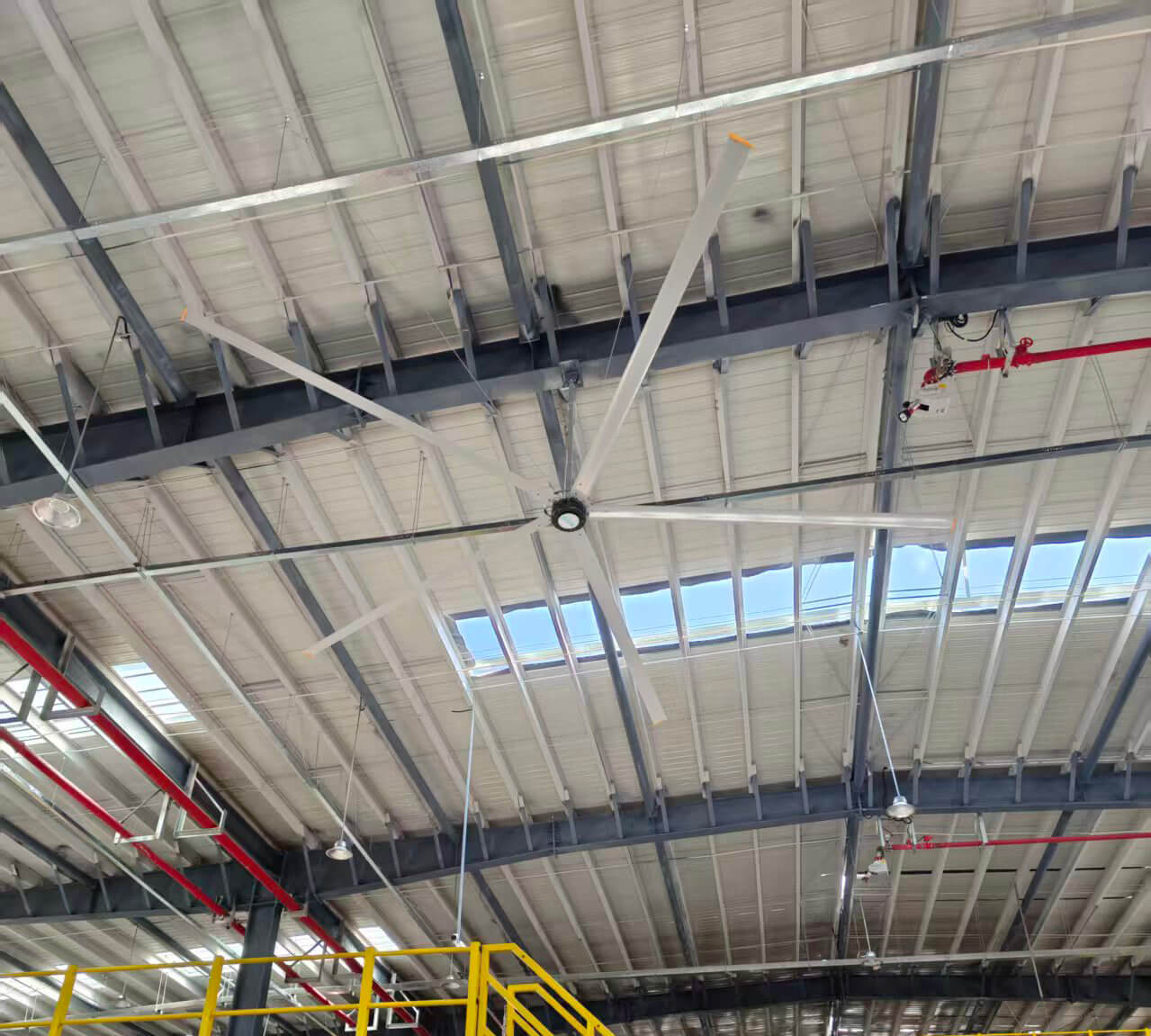
Ceiling fans near overhead cranes may be suitable in a building, but the layout must be reviewed against the crane’s full operating envelope before equipment is selected or installed. The review should include bridge and trolley travel, the hoist and suspended loads, fan blades and supports, structural capacity, maintenance access, and the site’s ventilation goals. A ceiling fan should never reduce required crane clearances or create a collision hazard.
What to check before locating ceiling fans near overhead cranes
An overhead crane moves across a runway, while its trolley and hoist move the hook and load through the work area. The actual space occupied during a lift changes with the crane position, hook height, load shape, and task. A ceiling fan has a fixed mounting point, but its blades and supporting components occupy overhead space continuously.
Checking only the crane bridge while it is parked is not enough. Planners should consider the complete movement of the crane and the loads handled below it. Include operating, inspection, repair, and replacement access in the review.
The site’s NORDL industrial ceiling fan product information can help identify the product’s stated applications and installation considerations. It does not replace a project-specific engineering review.
Map the complete crane operating envelope
Start with current building drawings and the crane manufacturer’s information. Mark the bridge travel along the runway, trolley travel across the bridge, hoist and hook positions, and the paths used for typical loads. Include unusually tall, wide, or long loads when they are part of normal work.
- Record where the crane bridge, trolley, hoist, hook, and load can move.
- Consider how loads may tilt or swing during normal handling, as assessed by the responsible site team.
- Include access platforms, walkways, electrical equipment, and inspection routes associated with the crane.
- Check the fan’s blades, hub, mounting assembly, and any parts needed for service or removal.
Do not assume that an empty hook represents the largest load envelope. If the work changes by product or shift, review the relevant operating cases with the crane owner and qualified engineering personnel.
Use project-specific clearance requirements
There is no single fan-to-crane spacing that can be safely applied to every building. Applicable regulations, crane and fan manuals, approved drawings, structural conditions, and the site’s risk review may all affect the layout. The responsible engineer or safety professional should confirm which requirements apply to the project.
Review the crane’s full movement against the proposed fan location. Check for possible interference with the bridge, trolley, hoist, hook, suspended loads, electrical collectors, walkways, and service access. Also consider installation and maintenance work: a fan that is clear during normal operation may still obstruct a repair route or equipment-removal path.
Never use this article as a substitute for a crane clearance specification or a local safety requirement. If the drawings are incomplete or the operating envelope is uncertain, pause fan placement until the responsible site team resolves the uncertainty.
Verify the building support before selecting a location
A fan mount transfers load to a building structure. The support point and attachment method should be checked for the actual structure and the selected fan by qualified design personnel. Do not attach a fan to a crane bridge, runway, or crane component unless that arrangement has been specifically designed and approved by the relevant engineers and equipment manufacturers.
The NORDL product page describes installation planning for qualified structures. Confirm the structure, attachment details, and service access for the exact project rather than relying on a general ceiling-height estimate or another building’s layout.
Keep the fan’s role clear in the air system
An industrial ceiling fan moves air within a space. It does not provide outdoor air, capture a contaminant at its source, or replace exhaust and ventilation equipment. Before choosing a location, review how the proposed air movement interacts with supply diffusers, exhaust points, process areas, and occupied work zones.
If the building handles fumes, dust, heat, or other process emissions, have the ventilation design reviewed by the responsible specialist. A fan should not be positioned in a way that interferes with the intended capture or exhaust path. Use the site’s ventilation plan to define what air movement is expected from the ceiling fan.
Plan installation, operation, and maintenance
Before work begins, coordinate the fan installation with the crane owner, facility engineer, maintenance team, and qualified installers. The work plan should identify access equipment, isolation and work-area controls, and how crane activity will be managed while people are working overhead. Follow the applicable site procedures and manufacturer instructions.
After installation, have qualified personnel review the fan location and the crane’s normal operating cases against the approved plan. Do not test clearance by moving a crane or load toward a fan to see whether they pass. If the crane route, load profile, fan position, or building structure later changes, reassess the arrangement before the changed operation proceeds.
For other industrial ceiling fan options, see the site’s HVLS fan collection. Final selection and placement depend on the product information and a review of the actual building.
Frequently asked questions
Can an industrial ceiling fan be installed above an overhead crane?
Only if the proposed location, mounting structure, and complete crane operating envelope meet the project’s applicable requirements. The answer cannot be determined from ceiling height alone.
What clearance should be left between a fan and a crane?
Use the applicable local requirements, crane and fan documentation, approved drawings, and project engineering review. Do not apply a generic distance from an unrelated building or equipment model.
Can a ceiling fan be fixed to a crane runway?
Do not assume that a crane runway or bridge can support a fan. Any attachment to crane-related structure requires specific design review and approval from the responsible engineers and equipment manufacturers.
Will a ceiling fan replace ventilation in a crane-served workshop?
No. A ceiling fan circulates air in the space; the building’s ventilation and source-control systems must continue to perform their intended functions.