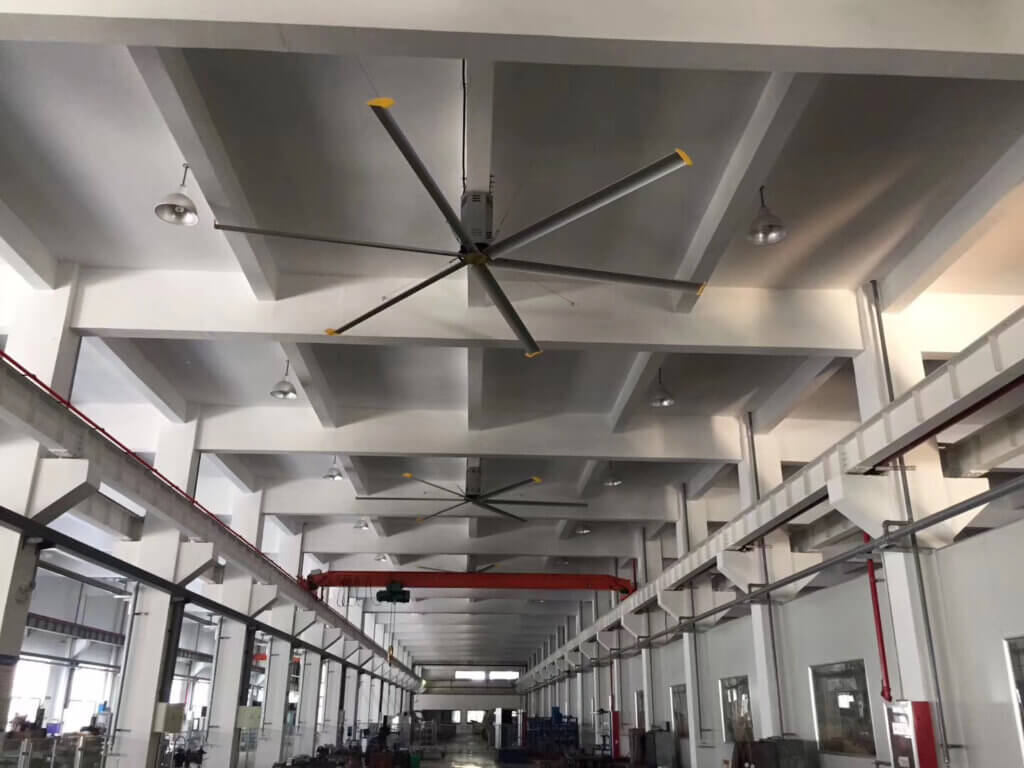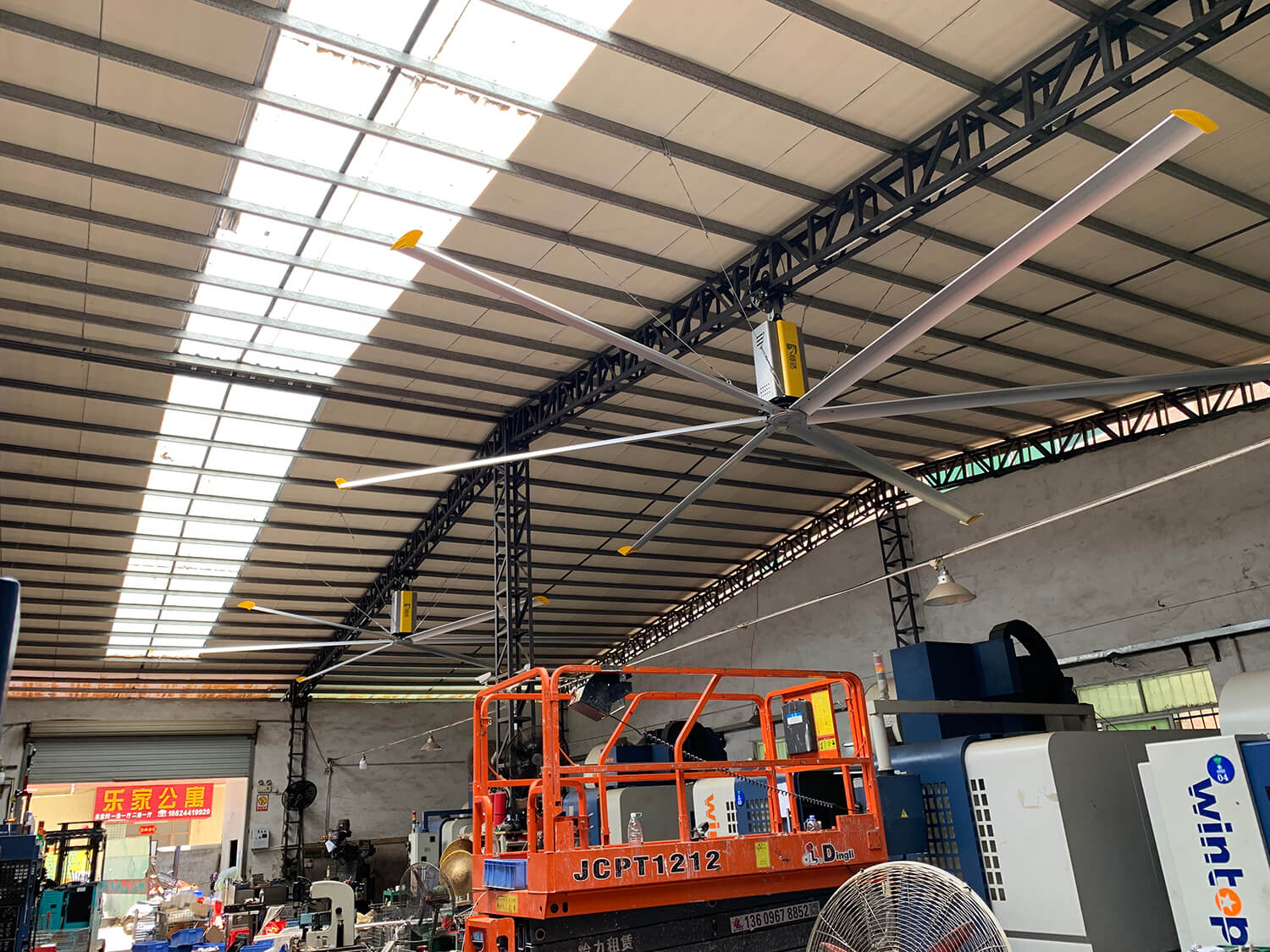
Do industrial ceiling fans cool a room? They can make people feel cooler by moving air across occupied areas, but they do not lower the room’s air temperature. They change how air moves and how heat is felt at skin level; they are not a replacement for a cooling system when the goal is to reduce the temperature of the air itself.
What an industrial ceiling fan changes
A ceiling fan circulates air through blade rotation. The resulting air movement can help perspiration evaporate and carry heat away from the body, so people in the airflow may feel more comfortable. This effect depends on people being present in the area and on the airflow reaching them.
A fan does not remove heat from the building or supply chilled air. If you measure the room with a thermometer, running a ceiling fan alone generally does not make the room air cooler. The motor also adds some heat to the space while it operates.
Why airflow can improve comfort
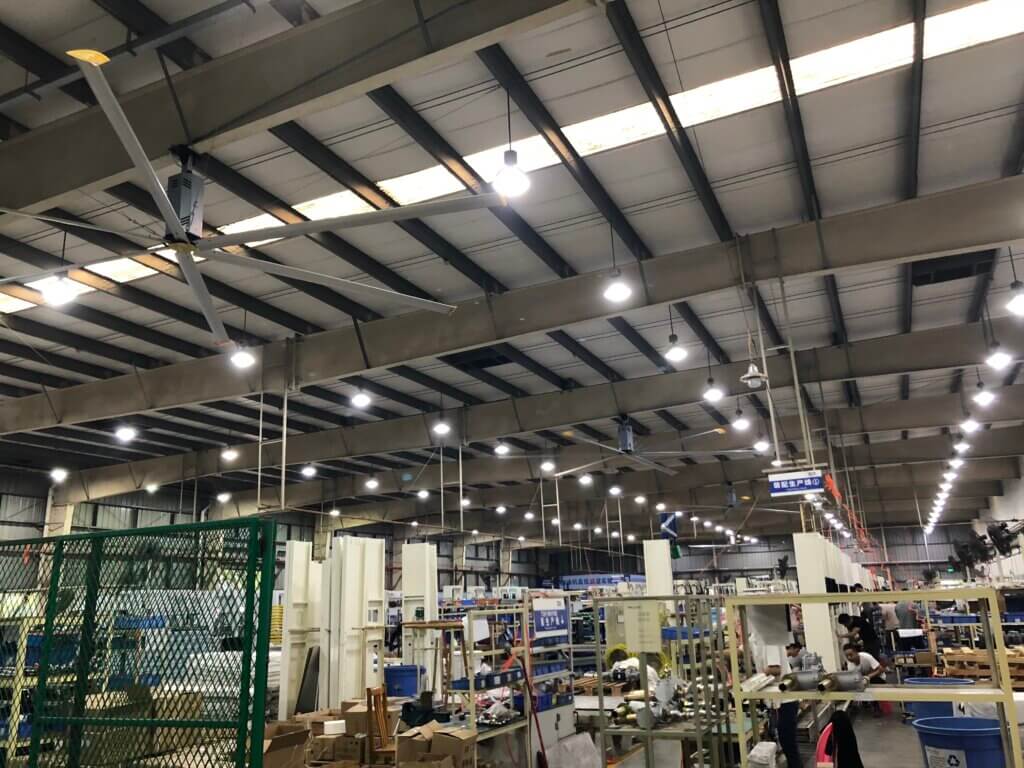
In a large workshop, warehouse, or production area, air may feel still in occupied zones even when the room has ventilation. A suitably selected industrial ceiling fan can help circulate air through a broad area and reduce the sensation of stagnant air. The comfort benefit is strongest where people are in the moving air; an unoccupied room does not become cooler just because the fan is on.
Air movement is not the same as outdoor-air ventilation. A ceiling fan mostly moves the air already in the space. It does not, by itself, remove contaminants, moisture, or heat from a process. Those goals require a system designed for the specific ventilation or cooling need.
When an industrial ceiling fan may be useful
Industrial ceiling fans are commonly considered for large indoor areas such as factory workshops, production lines, warehouses, retail spaces, exhibition halls, sports venues, and transportation facilities. The Hengshuangda product directory includes an IE4 PMSM industrial ceiling fan with listed application settings including workshops, production lines, warehousing, malls, exhibition spaces, sports arenas, docks, and transportation hubs. Suitability depends on the specific site and fan model.
What to check before choosing a fan
- Occupied areas: Identify where people work or gather and whether the airflow can reach those zones.
- Room geometry: Confirm ceiling height, available mounting points, and clearances around lights, services, machinery, and other overhead equipment.
- Building structure: Have the mounting location and support method checked for the selected fan and installation conditions.
- Operating conditions: Review the product information for the exact model, including electrical requirements and installation instructions. Do not assume specifications from one model apply to another.
- Actual goal: Decide whether the need is improved air movement for occupant comfort, outdoor-air exchange, or lower air temperature. These are different outcomes and may require different equipment.
Start with the facility’s layout and the product’s model-specific documentation. You can review the Hengshuangda industrial fan product directory to compare the available fan types and open the relevant product details.
Frequently asked questions
Will an industrial ceiling fan lower the temperature shown on a thermometer?
Usually not. A ceiling fan moves air and can make people feel cooler, but it does not actively remove heat from the room air.
Should a ceiling fan run in an empty room?
If the purpose is occupant comfort, switch it off when the area is empty. The perceived cooling effect benefits people in the airflow rather than lowering the room temperature.
Can a ceiling fan replace ventilation or air conditioning?
No. It circulates room air but does not by itself provide outdoor-air exchange or reduce the air temperature. Select equipment according to the required outcome and the conditions of the building.
Does every industrial ceiling fan suit every large room?
No. Room dimensions, ceiling structure, mounting clearances, occupied zones, and the selected model’s documented limits all matter. Check the specific product information and have installation conditions reviewed for the site.