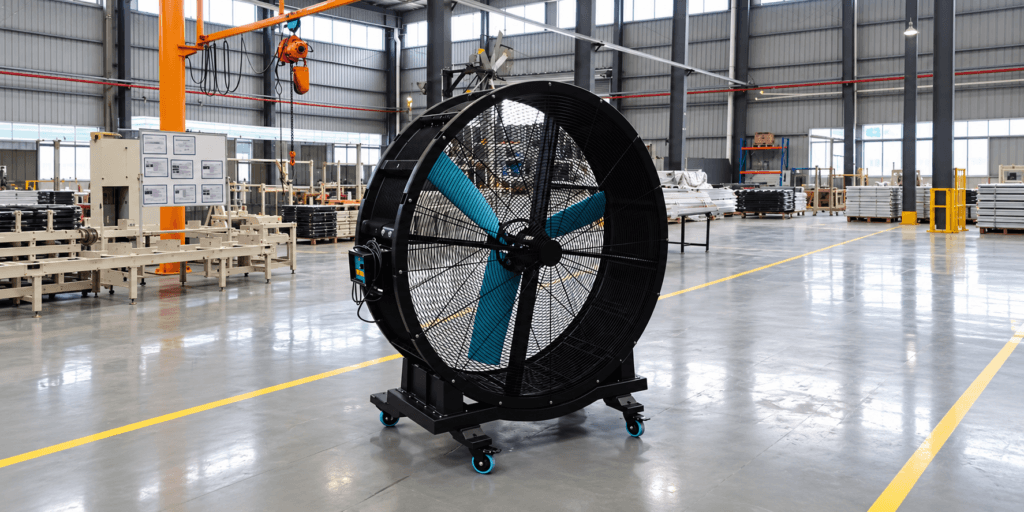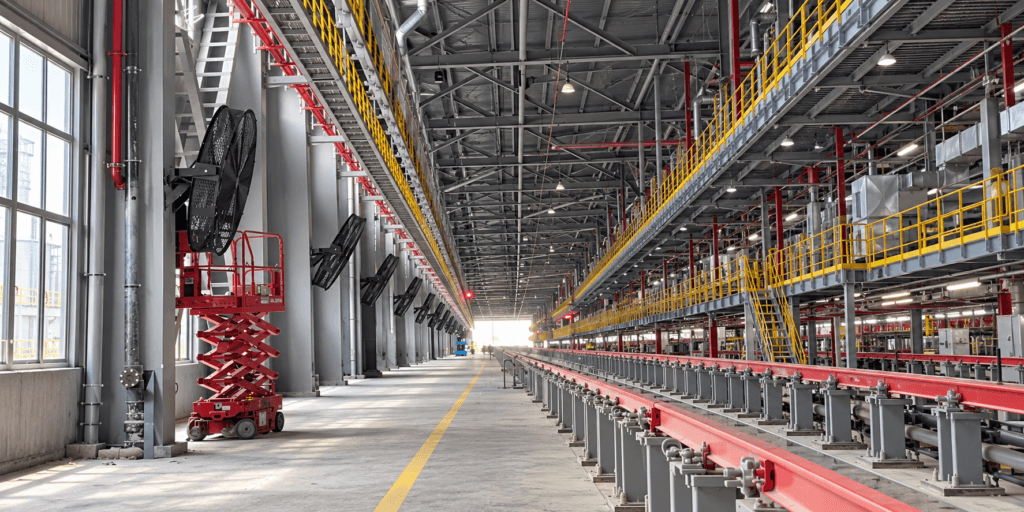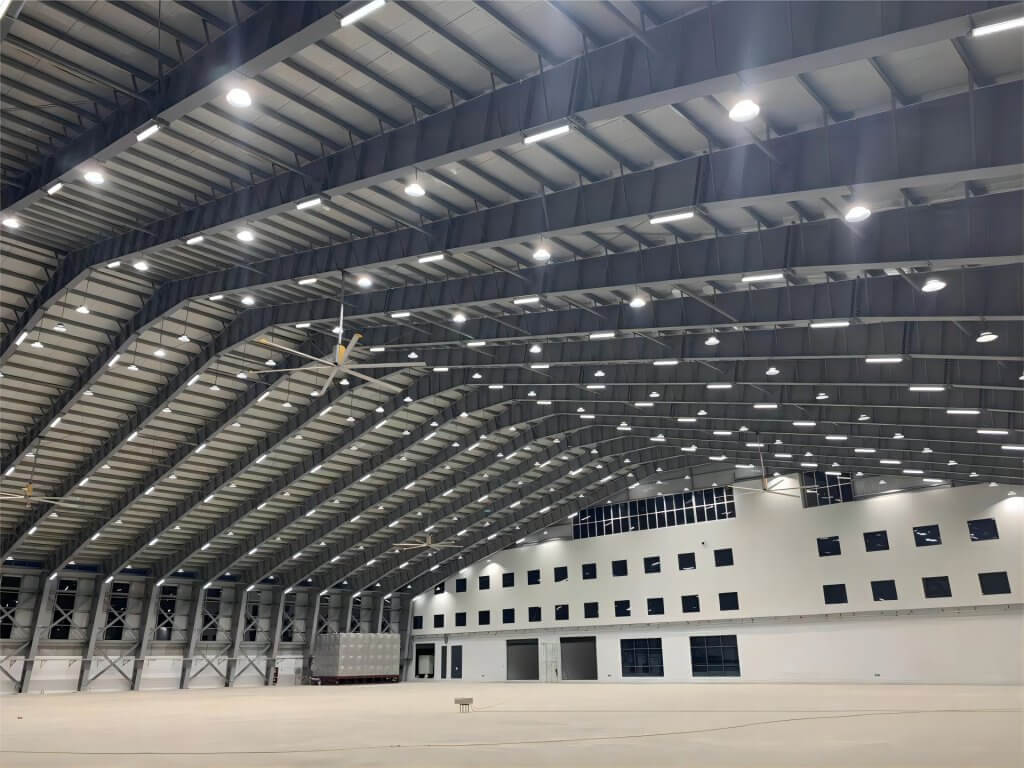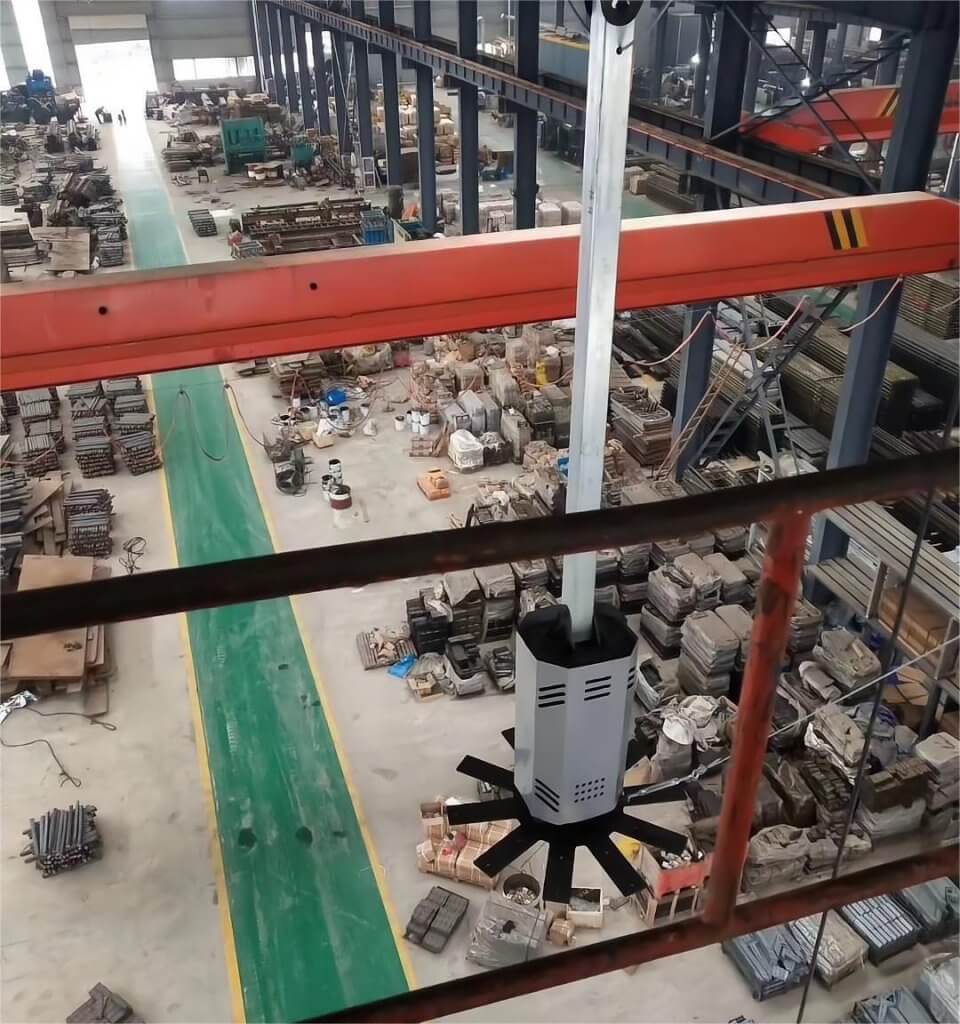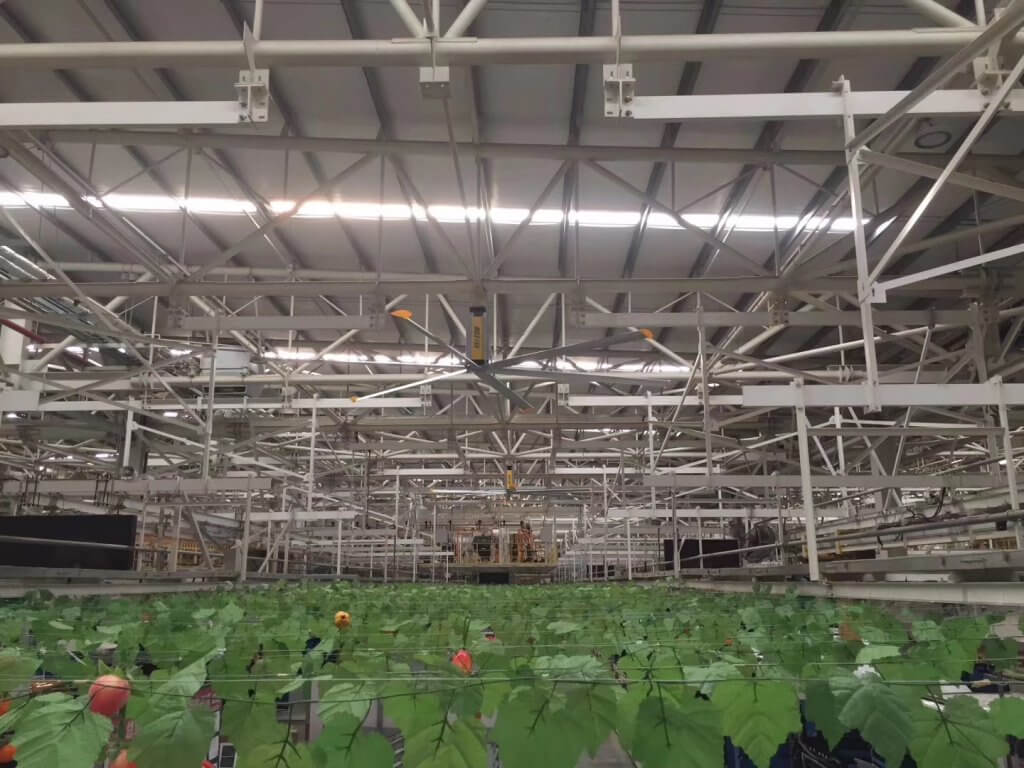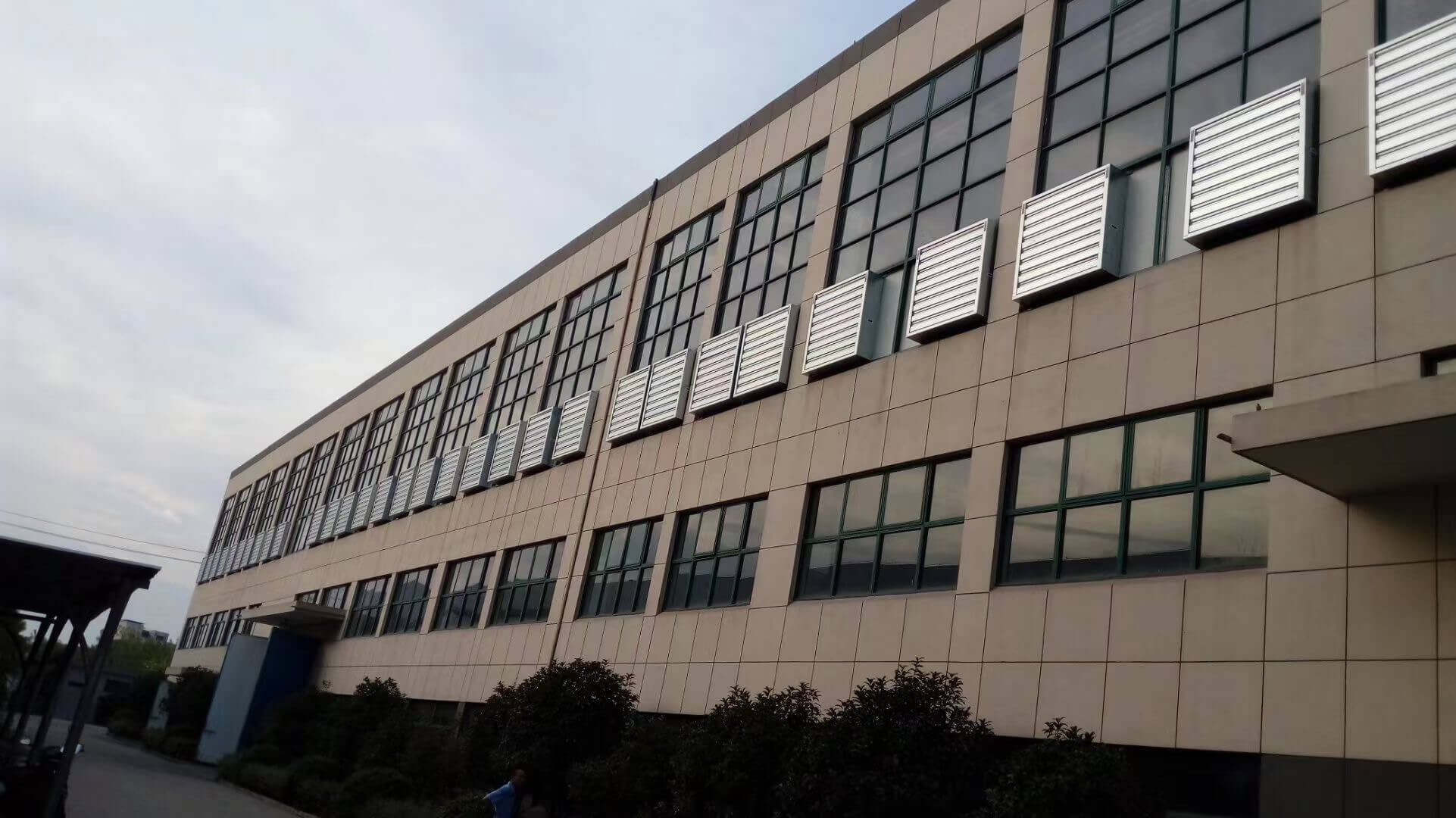
A negative pressure exhaust fan removes indoor air so replacement air enters through planned openings. When the incoming air path is arranged well, this creates a directed flow through a factory or workshop and helps carry heat, odors, and airborne contaminants toward the exhaust side. The system works only when the fan, make-up air openings, and room layout are considered together.
What does negative pressure mean?
In a mechanically ventilated room, negative pressure means the exhaust system removes air faster than it is replaced through the available openings, so the indoor pressure is slightly below the pressure outside. Air then moves from the higher-pressure side into the room through doors, louvers, windows, or other planned inlets. The exact pressure depends on the fan, openings, leakage, and resistance to airflow; it is not defined by the fan name alone.
How a negative pressure exhaust fan creates a useful airflow path
The fan pulls air out at the exhaust point. Replacement air should enter on the opposite or otherwise suitable side and pass through the occupied or hot area before it reaches the fan. This helps avoid short-circuiting, where fresh air takes the easiest route directly to the exhaust without moving through the zone that needs ventilation.
For a factory ventilation plan, first identify where heat, moisture, odors, or general stale air collect. Then consider where make-up air can enter, how it will travel across the room, and where it can be discharged safely. Partitions, machinery, stored materials, and closed doors can change the flow path, so a layout that looks simple on paper still needs a site review.
Why make-up air matters
An exhaust fan cannot move the intended volume of air if replacement air has no adequate route into the building. Restricted inlets increase resistance and can reduce actual airflow. They may also cause unwanted drafts through gaps or make doors harder to open. Provide deliberate inlet paths and keep them clear; do not assume that leakage through the building will provide reliable make-up air.
Choosing a negative pressure exhaust fan for a factory or workshop
- Define the problem: distinguish general heat removal and stale-air ventilation from a process that needs local capture of dust, fumes, or vapor.
- Describe the space: record room dimensions, ceiling height, openings, internal partitions, equipment, and the locations people occupy.
- Plan the full air route: identify the make-up air inlets, the path through the work area, and a suitable discharge location.
- Use verified fan data: compare the required airflow with the manufacturer’s published performance information at the expected system resistance. A free-air figure alone may not represent installed performance.
- Check the installation: confirm mounting structure, electrical supply, access for service, weather exposure where relevant, and safe clearances with the supplier and responsible site professionals.
The number and size of fans should be determined from the room conditions and the ventilation objective, not from floor area alone. If the process produces hazardous dust, smoke, solvent vapor, or other contaminants, general room exhaust may not replace suitable source capture, filtration, or other required controls.
Applications and limits
Negative-pressure exhaust ventilation is commonly considered for industrial buildings that need a planned route for removing warm or stale indoor air. Hengshuangda’s published Sichuan mining-site ventilation case describes exhaust fans creating a negative-pressure environment. That case also used cooling pads, so it is an example of a specific project arrangement rather than a specification for every factory.
Negative pressure does not by itself guarantee a particular indoor temperature, uniform airflow, or contaminant concentration. Those outcomes depend on the building, the air entering the space, the heat and contaminant sources, fan selection, and operating conditions. Where cooling, filtration, or process exhaust is required, assess those needs separately as part of the system design.
Frequently asked questions
Does a negative pressure exhaust fan bring fresh air into a building?
The exhaust fan removes indoor air. Replacement air enters through openings in the building. For predictable ventilation, plan those inlet paths so incoming air passes through the intended area before reaching the exhaust fan.
Can one exhaust fan ventilate every factory space?
No single fan selection suits every building. Room volume, inlet area, airflow resistance, heat or contaminant sources, layout, and the required ventilation objective all affect the design. Confirm these conditions before selecting equipment.
Is general exhaust enough for process fumes or dust?
Not necessarily. General ventilation moves room air, while some processes need capture close to the source or additional treatment. Have the specific hazard and applicable controls assessed by a qualified professional.
Key takeaway
A negative pressure exhaust fan works as part of a complete ventilation path: air is removed at one point and replacement air enters through planned openings. Start with the airflow route and site conditions, then select a fan using verified performance data and a project-specific installation review.