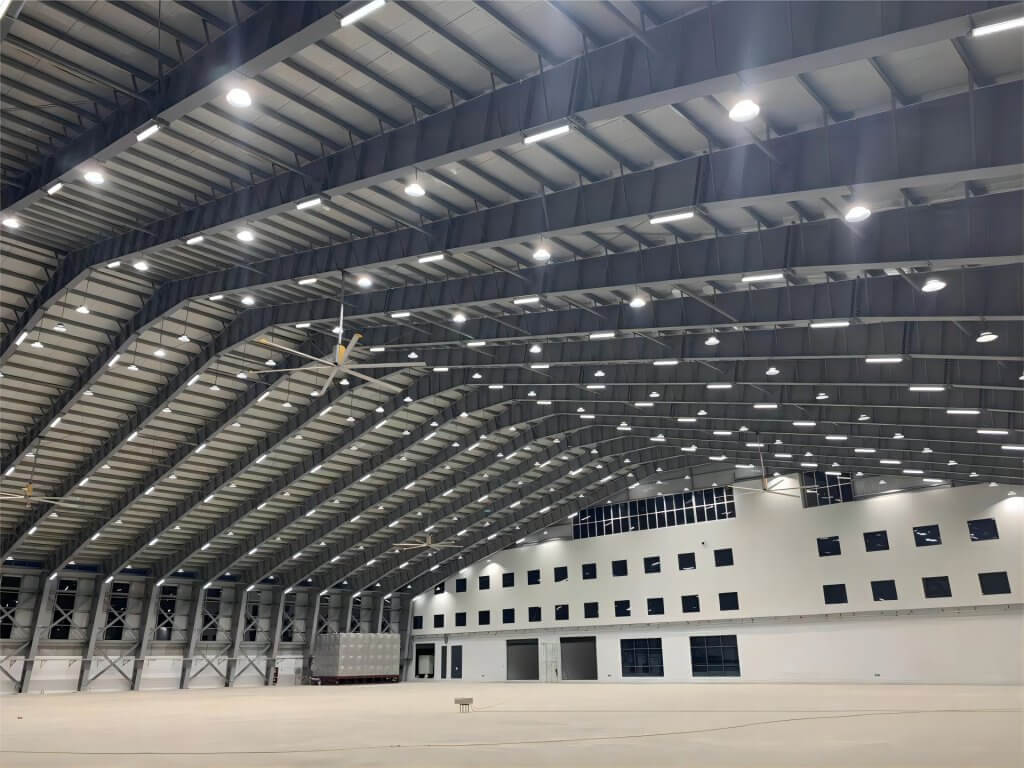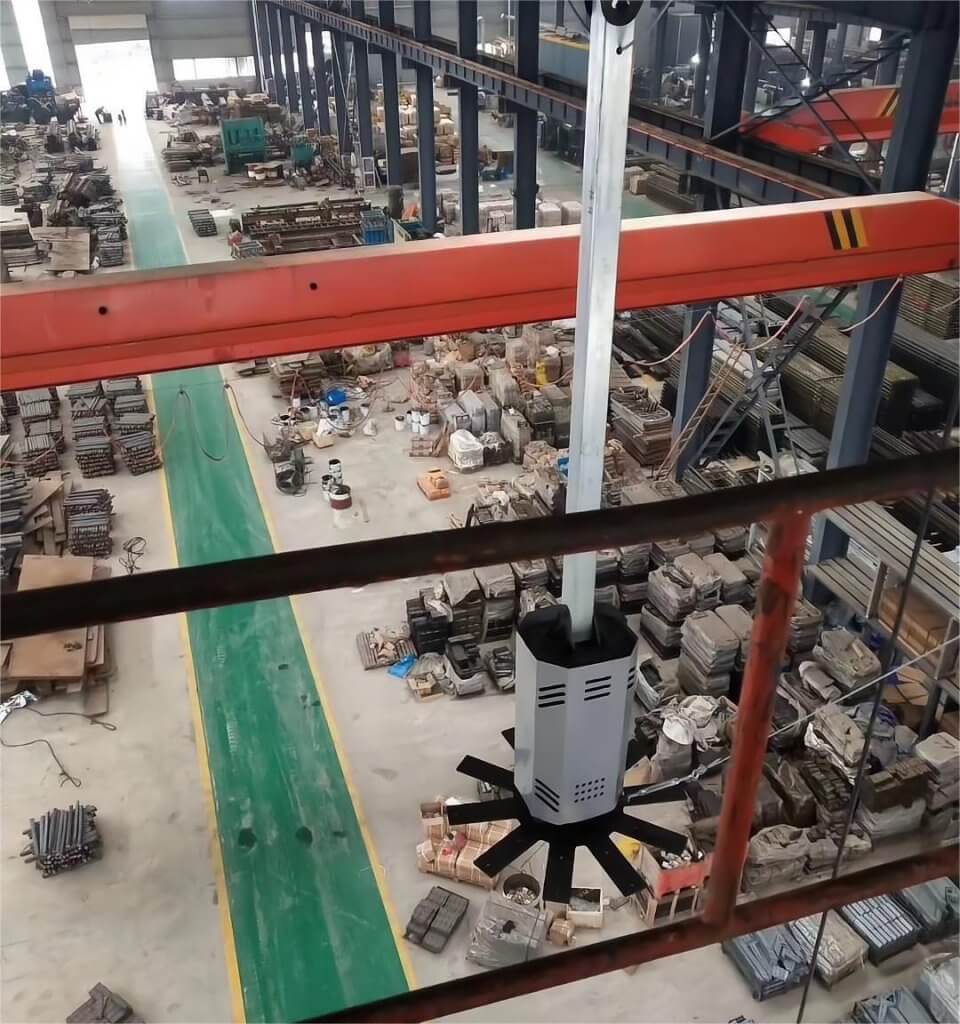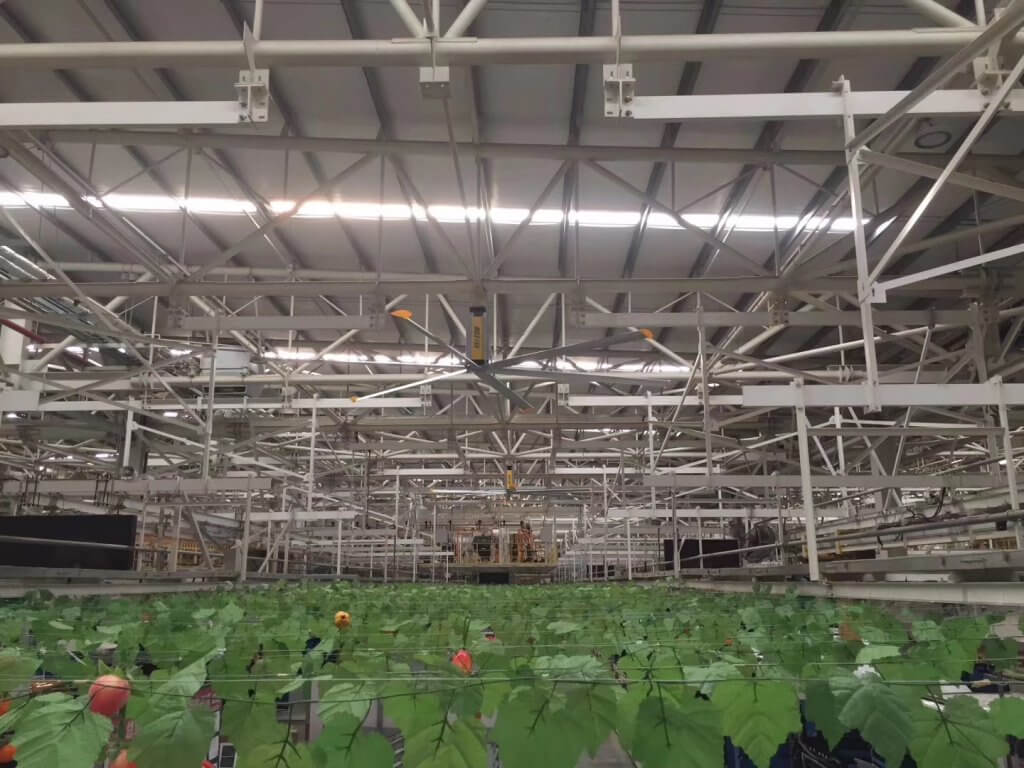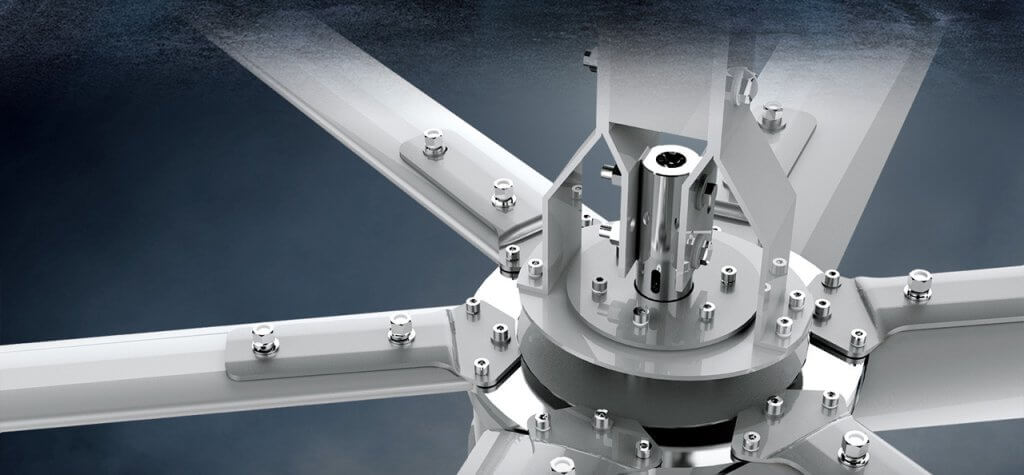
An industrial wall mount fan can add directed airflow to a workshop while keeping floor space available for people, carts, and equipment. To plan a useful installation, consider the work area, obstructions, air inlets, and the path air can follow through the room. This guide explains practical checks for planning wall-mounted fan airflow.
What an Industrial Wall Mount Fan Does
A wall-mounted fan moves air through an occupied area without using floor space. Hengshuangda’s industrial wall fan product page describes its wall fan for indoor industrial and commercial environments, including workshops and warehouses. The page lists adjustable direction and speed among its features.
A circulation fan can support air movement and comfort, but it should not be treated as a substitute for a ventilation system designed to control hazardous dust, fumes, vapors, or gases. OSHA distinguishes general ventilation from local exhaust ventilation, which is designed to capture contaminants near their source.
1. Map the Workshop Before Choosing a Location
Mark workstations, machinery, shelves, doors, windows, and existing supply or exhaust openings on a simple floor plan. Identify where people work and where heat or stagnant air is a concern. Shelving, partitions, and equipment can block or redirect airflow, so an open wall does not automatically make a good fan location.
Think about the complete air path: where suitable air enters, how it crosses the occupied zone, and where it can leave. Avoid a layout that sends air directly from an inlet to an exhaust opening while bypassing the work area.
2. Aim Air Toward the Occupied Zone
Direct the fan toward the area that needs air movement. Use its adjustable direction to fit the room layout, then check the result under normal working conditions. Consider whether airflow reaches the workstations or is blocked by equipment and stored materials.
- Check airflow at the places where workers spend time.
- Avoid an uncomfortable draft at a fixed workstation.
- Keep the fan stream from disturbing loose materials or sensitive processes.
- Review each work zone separately in a large or irregular room.
3. Check the Mounting Area and Clearances
Before installation, confirm that the wall and mounting arrangement are suitable for the selected fan and the building structure. Follow the manufacturer’s instructions for mounting, electrical connection, operation, and maintenance. Keep objects clear of the fan guard and moving parts, and do not improvise a mounting method.
Hengshuangda’s product information for the wall-mounted fan describes an adjustable direction and a protective grille. The exact configuration and requirements should be checked for the model being installed.
4. Coordinate Circulation With Ventilation
A wall fan circulates air within a space; it does not by itself establish a complete supply-and-exhaust ventilation system. Exhausted air needs replacement air. OSHA notes that insufficient makeup air can reduce exhaust airflow and create drafts or pressure differences around doors and windows. See the OSHA Technical Manual guidance on industrial ventilation.
If a process creates hazardous airborne contaminants, select controls based on the process and the hazard. General circulation should not be relied on to capture contaminants at their source; local exhaust or another suitable control may be required.
5. Verify Operation and Plan Routine Checks
After installation, check that the fan is secure, unobstructed, and directing air through the intended work area. Observe whether the airflow path changes when doors open or production equipment operates. Recheck placement if the workshop layout changes.
During routine checks, look for visible damage, unusual noise or vibration, a blocked guard, or loose mounting. Clean and maintain the fan according to the manufacturer’s instructions and the site’s maintenance procedure.
Frequently Asked Questions
Where should an industrial wall mount fan be placed?
Choose a position where the fan can direct air toward the occupied work area without being blocked by machinery, shelving, or partitions. Consider the inlet-to-exhaust path and verify airflow after installation.
Can a wall-mounted fan remove workshop fumes or dust?
A circulation fan alone should not be assumed to capture or safely remove hazardous contaminants. Work involving dust, fumes, vapors, or gases may require a ventilation control designed for that specific process.
Does one wall fan provide airflow across an entire workshop?
That depends on the room layout, obstructions, heat sources, and airflow path. Check the conditions in each occupied zone rather than assuming that air is distributed evenly throughout the building.
Conclusion
Industrial wall mount fans can provide directed airflow while preserving floor space. Plan placement around the occupied work area, keep the airflow path clear, and coordinate circulation with the room’s ventilation design. For product details, see Hengshuangda’s industrial wall fan and the full product catalog.
Technical reference: OSHA Technical Manual: Industrial Ventilation.